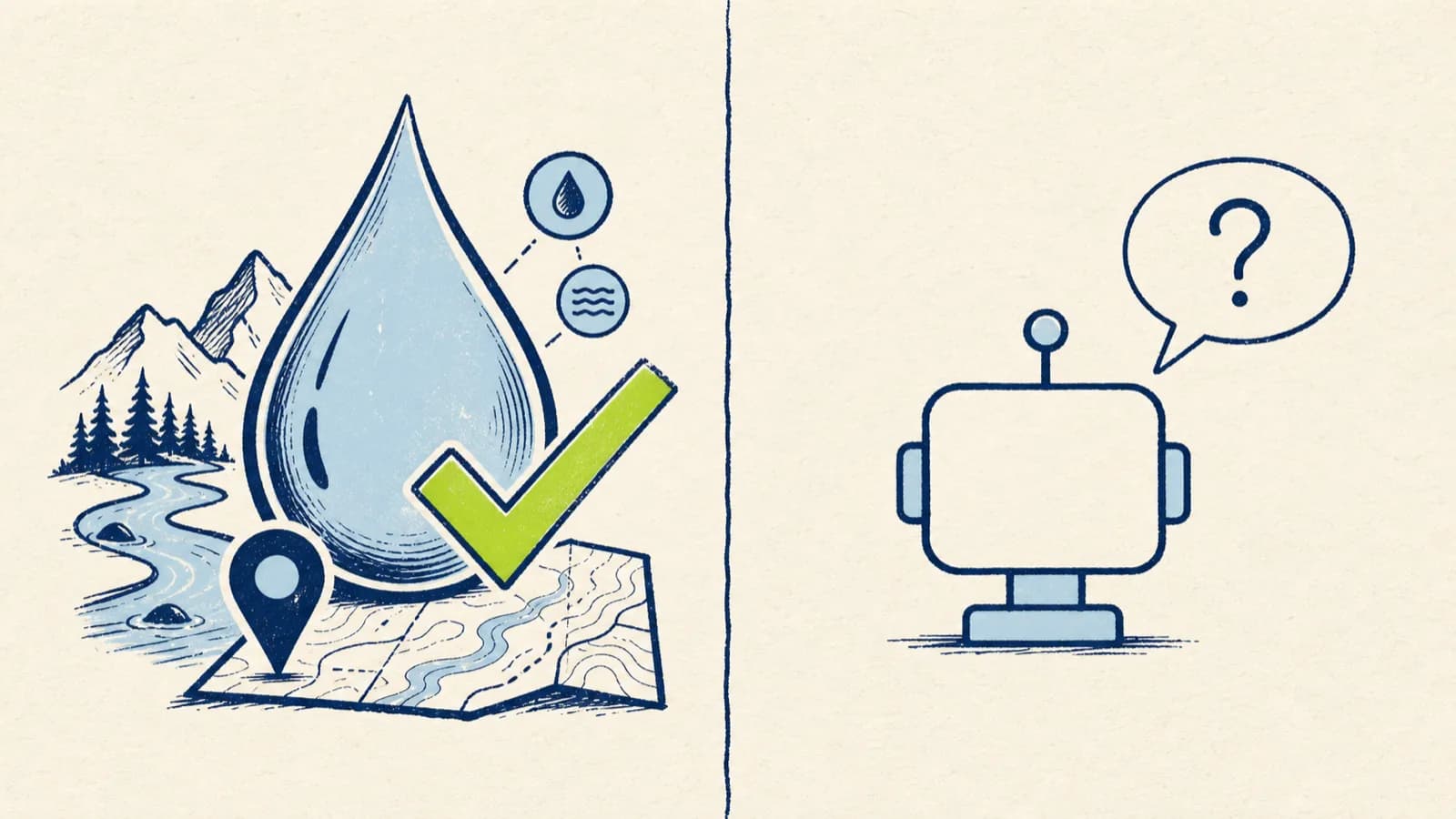
They look the same — a chat box in the corner of your site. But a generic chatbot and an AI water specialist do fundamentally different jobs. The difference is grounding: whether the answer is retrieved from a real source, or generated to sound plausible — and generic models get specialist legal questions wrong on 69–88% of tries (Stanford, 2024). For a water sale, that difference decides whether the homeowner trusts you enough to book.
How do they compare, side by side?
Why does a generic chatbot lose the water sale?
A chatbot is trained on your FAQ. Ask it something outside that script — "I've got orange staining on well water, what do I need?" — and it does one of two bad things: deflects ("someone will call you back") or guesses. Deflection hands the lead to whoever answers faster. Guessing is worse: the first time it invents a certification, a capacity, or a price, the homeowner stops trusting the brand behind it. Neither books a test.
What does grounding change?
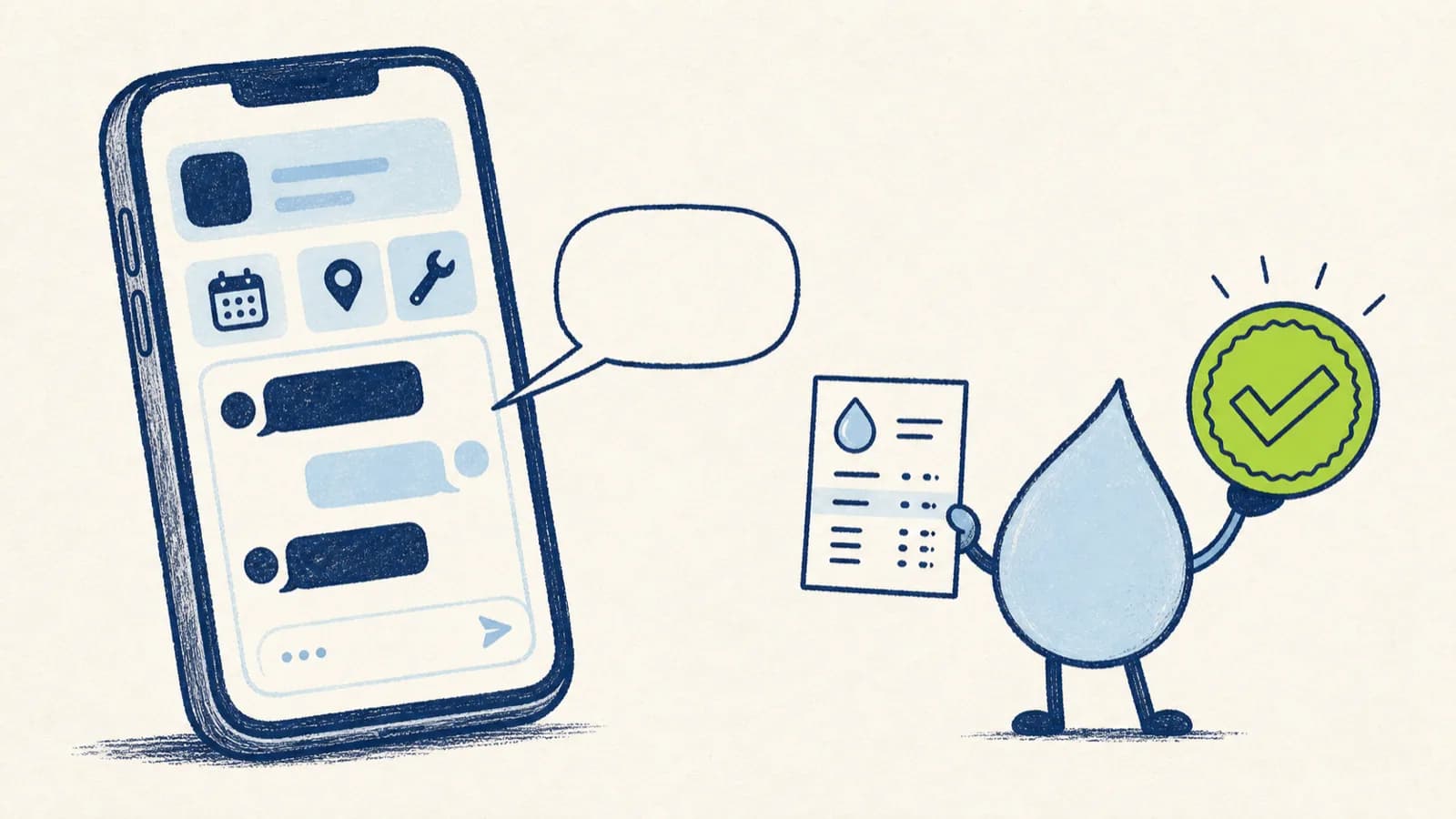
An AI water specialist doesn't generate the facts — it retrieves them. It reads the contaminants actually detected in the visitor's ZIP from EPA data, maps the problem to the right treatment against NSF/ANSI standards, and recommends a system from your catalog. Because every claim is sourced, it can be specific and confident without risking your brand — and specificity is what earns the in-home test.
How often does a generic model actually get it wrong?
Often enough that it's the whole argument. When Stanford researchers tested general-purpose large language models on specialist legal questions, the models hallucinated on 69–88% of them (Stanford RegLab, 2024) — and a wrong answer sounds exactly as confident as a right one. Even purpose-built, retrieval-grounded systems still got it wrong in more than 1 in 6 cases (Stanford HAI, 2025), which is the honest case for grounding plus a human handoff rather than grounding alone. The takeaway isn't that AI can't help; it's that grounding is what turns a confident guesser into a reliable specialist. For a homeowner asking "is my water safe?", that's the difference between losing trust and earning the test.
When is a chatbot actually enough?
Be honest with yourself about the job. If your site chat only needs to answer hours, directions, and "do you service my area," a simple chatbot is a fine, cheap tool. The line is technical water questions: the moment a homeowner wants to know what's in their water and what to do about it, only a grounded specialist should answer.