The direct-to-consumer filter brands built their marketing on one line: skip the salesperson. Buy the box, install it yourself, save money — and on price, they're right. A countertop DTC unit runs about $375–$475 (AquaTru, 2026); a professionally installed softener averages near $3,100 (This Old House, 2026). You will not win that comparison, and you shouldn't try. You win on the thing a box can't ship: 58% of US households say they're worried about their water but don't know where to turn (WQA, 2025) — and a mail-order filter can't resolve that. A real diagnosis can.
Households worried about their water who say they don't know where to turn for help.
Source: WQA, 2025
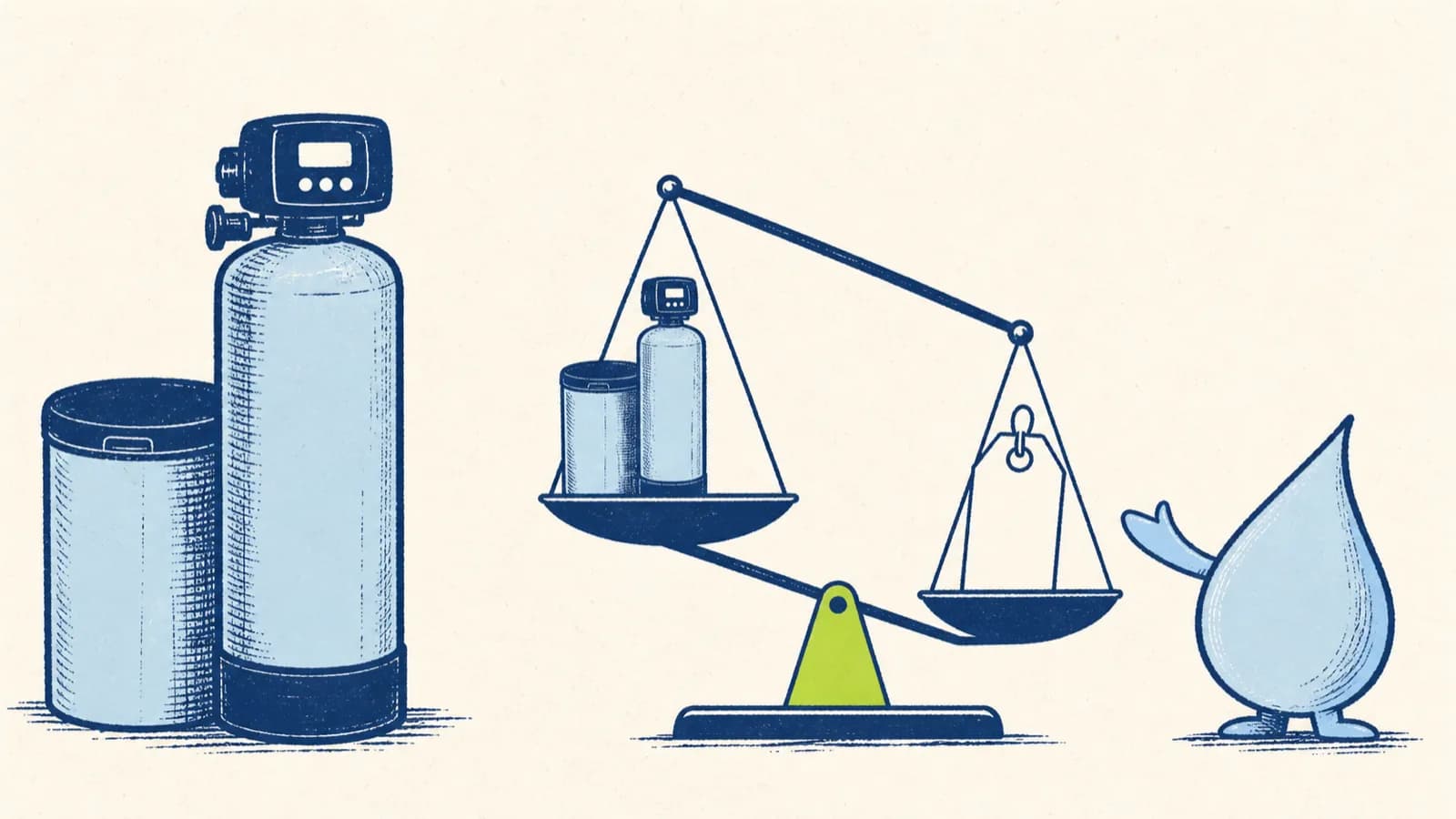
Countertop DTC filter vs. professionally installed softener — why price is the wrong battlefield.
Source: AquaTru / This Old House, 2026
Growth in home water-treatment ownership since 2021 — a rising, confused market.
Source: WQA, 2025
Why shouldn't you fight on price?
Because you'll lose, and the fight isn't worth winning. The DTC price point — a few hundred dollars, shipped free, installed by the homeowner — is structurally lower than a sized, installed, serviced system. Matching it means stripping out the diagnosis, the fit, and the service that are the reason your system actually works. The homeowner comparing a $449 box to a $3,100 install on price alone was never your customer; the one asking "which of these will actually fix my water?" is.
What do the DTC brands do well?
Give them their due. DTC filter brands are excellent at the top of the funnel: clean websites, easy checkout, a simple story, and — for some — real certification. AquaTru, for example, is independently certified to NSF/ANSI standards (by IAPMO) for dozens of contaminants; that's a legitimate product, not a gimmick. For a low-stakes, standard need — a renter who wants better-tasting tap water — they remove friction better than most dealers. Pretending otherwise is how you lose to them.
Where does a box fall short?
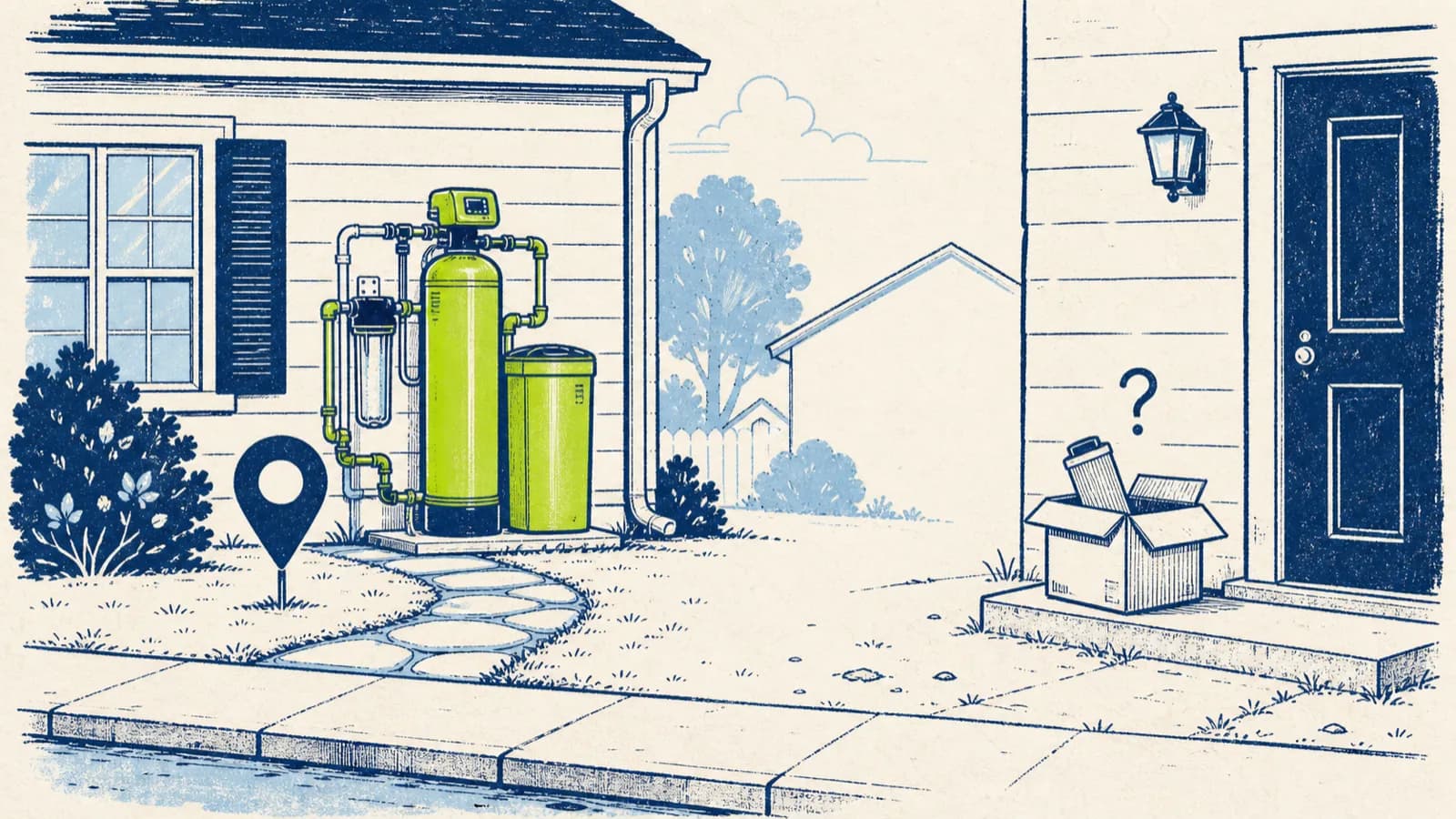
Its strength is also its ceiling. A box shipped sight-unseen can't know what's in a specific home's water. It can't tell ferrous iron from ferric, size for a household's flow, or catch that the "hard water" is actually a nitrate or bacteria problem in a private well that needs a different system entirely. So the homeowner self-diagnoses — and when they get it wrong, the brand eats a return and the customer eats the hassle.
Is "certified" the same as "tested to a standard"?
No — and this is a distinction you can teach a homeowner in one sentence. Certified to NSF/ANSI means an accredited body verified the product against the standard and audits it. "Tested to" or "meets" a standard is a self-reported claim with no third-party audit. The Black Berkey purification element, a popular DTC gravity filter, is not NSF-certified — that's per Berkey's own knowledge base. (Separately, in October 2023 the EPA issued a stop-sale order against Berkey's manufacturer over unregistered pesticide-device claims — docket FIFRA-08-2023-0038, now under appeal — a product-registration matter, not an NSF or filtration-performance question.) None of that makes every DTC brand suspect; AquaTru's certification is real. It means the homeowner should know which is which, and a dealer selling genuinely certified equipment is the natural person to explain it.
Is the DTC brand really the scrappy independent?
Often not — and it reframes the "skip the salesperson" pitch. Aquasana, one of the best-known DTC water brands, has been a subsidiary of A.O. Smith (NYSE: AOS) since an $87M acquisition in 2016. That's not a knock on the products; it's context. When a homeowner treats the mail-order box as the neutral, corporate-free choice, it's worth knowing that "direct to consumer" is a sales channel, not a certificate of independence.
Where do you actually win?
The dealer's edge is everything a box can't do sight-unseen:
- You know the water. You can tell a homeowner what's actually detected in their ZIP and what it takes to treat it — a real diagnosis, not a guess.
- You size it right. The correct system the first time means fewer callbacks and a customer who stays happy.
- You install and service. The one thing a box can never ship: standing behind the work.
- You're accountable. A local name and a real specialist beat a support ticket when something goes wrong.
How do you make the advantage visible online?
The problem isn't that dealers lack these advantages — it's that homeowners can't see them until after a sales call, by which point the DTC brand already got the click. Close that gap by putting a real diagnosis where the research happens: an AI water specialist on your site that reads the visitor's ZIP, names their likely problem in plain language, and books the in-home test — 24/7, so you're not losing the after-hours researcher to a one-click box. Show the expertise up front, and "skip the salesperson" stops sounding like a feature.