More water-treatment leads don't usually come from a bigger ad budget. The cheapest lead you'll get this month is the one you already generated and lost — the after-hours form nobody answered, the searcher who got a generic reply, the customer you never asked for a referral. The demand is real: 58% of US households are concerned about their tap water but say they're unsure where to go for help (WQA, 2025). This is the practical order for capturing more of it — most of it before you spend another dollar on ads.
Google Local Services Ads vs. blended PPC cost per home-services lead — the cheaper channel.
Source: SearchLight, 2026
More likely to qualify a lead contacted within the hour vs. after a day — speed is the cheapest lever.
Source: HBR, 2011
Consumers who read online reviews for local businesses — reputation is lead-gen.
Source: BrightLocal, 2026
1. Be findable where homeowners look
Most water-treatment jobs start with a local search — "water softener near me," "[city] iron water," "is my tap water safe." Win those by keeping your Google Business Profile complete and active, earning steady reviews, and publishing pages that answer the specific problems people search: hard water, iron, sulfur smell, well water, PFAS.
Reviews aren't vanity — they're distribution. 97% of consumers read online reviews for local businesses, 85% say positive reviews make them more likely to use one, and 77% say negative reviews put them off (BrightLocal, 2026). Findable and trusted beats clever.
2. Answer first — speed is the cheapest lever
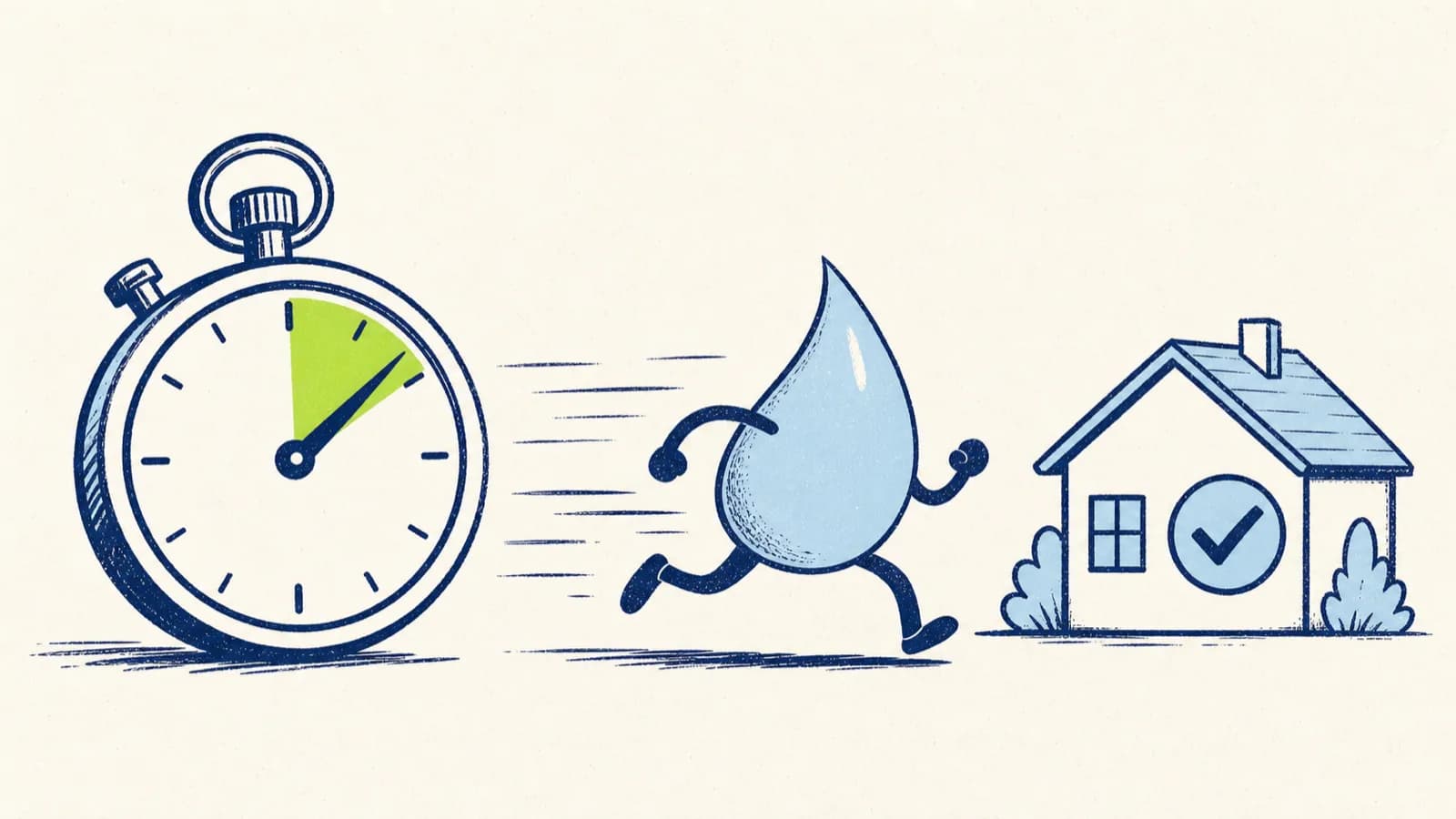
A homeowner who fills out a form or calls is comparing you against whoever replies next, and the research is blunt: contacting a lead within the first hour makes you about 60× more likely to qualify it than waiting a day — yet the average business takes 42 hours to respond (HBR, 2011). Respond in 5 minutes instead of 30 and you're roughly 100× more likely to even reach them (MIT/InsideSales, 2007).
The single highest-ROI change most dealers can make isn't more leads; it's replying to the ones they already get, instantly. That's the whole case for speed to lead.
3. Capture the after-hours moment
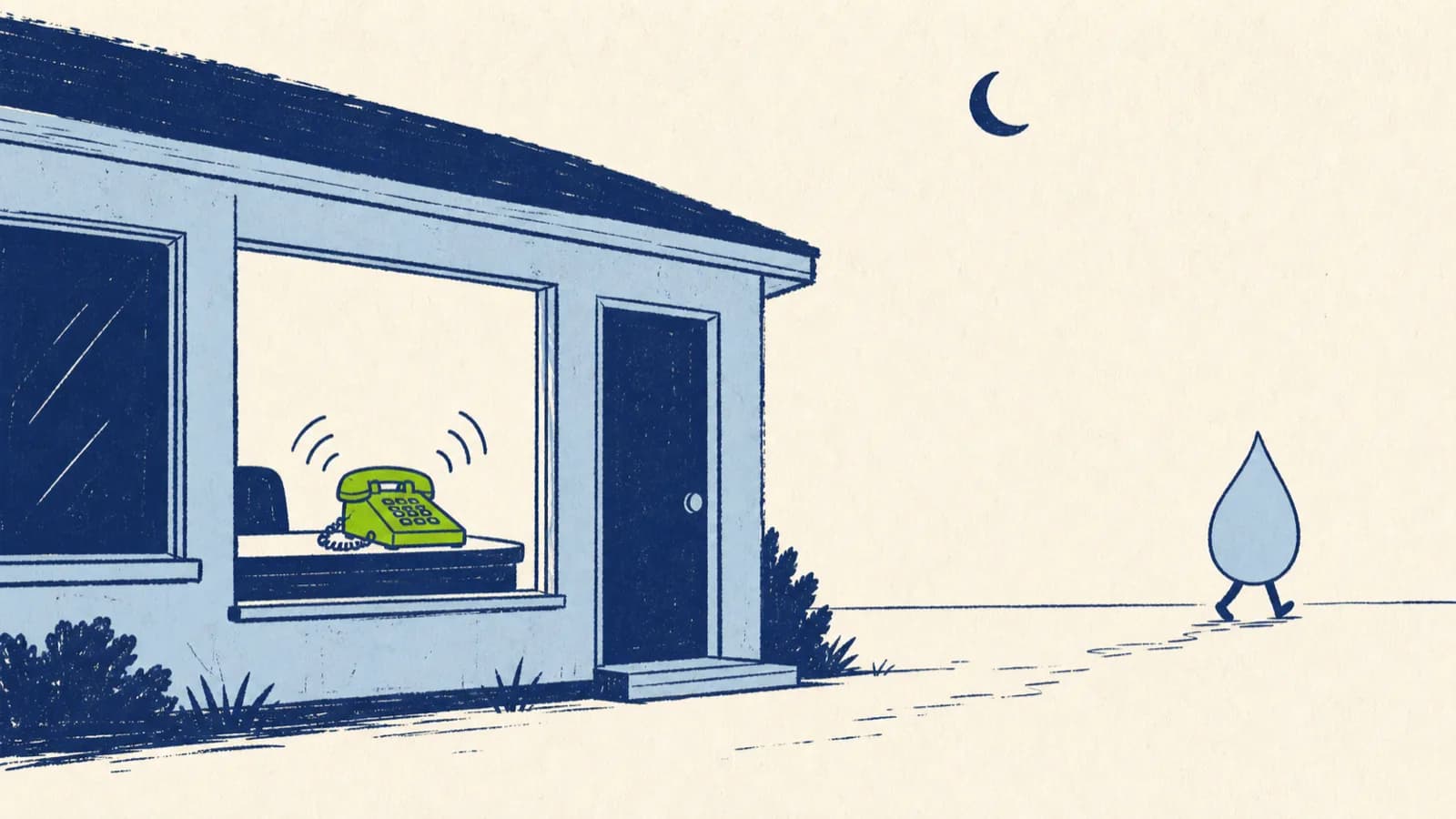
A large share of demand arrives at night and on weekends, exactly when your team is off — and about 27% of home-services calls already go unanswered (Invoca, 2024). If the after-hours web visitor gets silence, they move on. Close that gap with 24/7 capture — an AI water specialist on your website that answers, diagnoses, and books at 9 p.m. as easily as 9 a.m. — plus a missed-call text-back for the phone. The full breakdown is in what a missed lead really costs.
4. Convert with a diagnosis, not a pitch
The homeowner doesn't want to be sold — they want to know what's wrong with their water and what to do about it. That's the exact gap in the WQA finding: 58% are worried but don't know where to turn (WQA, 2025). Lead with the diagnosis — pull the ZIP's real data, name the likely problem (hardness, iron type, PFAS), and explain it plainly. A specific, sourced answer earns the in-home test; a generic "we can help with that" doesn't.
5. Turn customers into referrals
Your installed base is your cheapest lead source. A quick, genuine ask at install — plus a reminder when it's time for service — turns satisfied customers into the reviews and word-of-mouth that feed right back into step 1. Given that 97% of buyers check reviews first (BrightLocal, 2026), every happy customer you don't ask is a lead you don't earn.
Should you buy leads instead?
Usually not as your first move. Bought leads are shared and cold, and the math on your own funnel is better than it looks: one water-treatment dealer profiled by WaterWorld was paying roughly $400 per lead and about $1,000 in ad spend per sale before it got systematic — then reached 5× ROI in three months and 10× in six by methodically testing its own landing pages, offers, and response process rather than renting more lists (WaterWorld, 2020). Fix your capture and speed first; buy leads only to top up a funnel that already converts.